Hilma af Klint · Paintings for the Temple (1906–1915)
Grand Palais, Paris · 6 May – 30 August 2026 Organized with Centre Pompidou
The story of Hilma af Klint (1862–1944) is one of the most compelling in modern art history - not merely as a tale of a woman overlooked, but as a fundamental challenge to the chronology of abstraction itself. A first-generation female student at the Royal Academy of Fine Arts in Stockholm, af Klint maintained a successful figurative practice conventional during her times, and throughout her career. In secret, she was producing something entirely different – over 1200 pieces of abstract works, which were literally locked in a vault and stipulated to remain unseen for twenty years after her death.
Since her involvement with Spiritism[1] in 1896 and later with Theosophy[2], af Klint had been making abstract paintings of organic and geometric forms in vivid colors that explored cosmic, spiritual, and invisible forces.
The Paintings for the Temple[3] -193 works created between 1906 and 1915, the entirety of which was shown at the Grand Palais in the first major monographic exhibition of her work in France. It predates Kandinsky's first abstract watercolor (ca. 1910) by years, making her the actual pioneer of abstraction in modern art history.
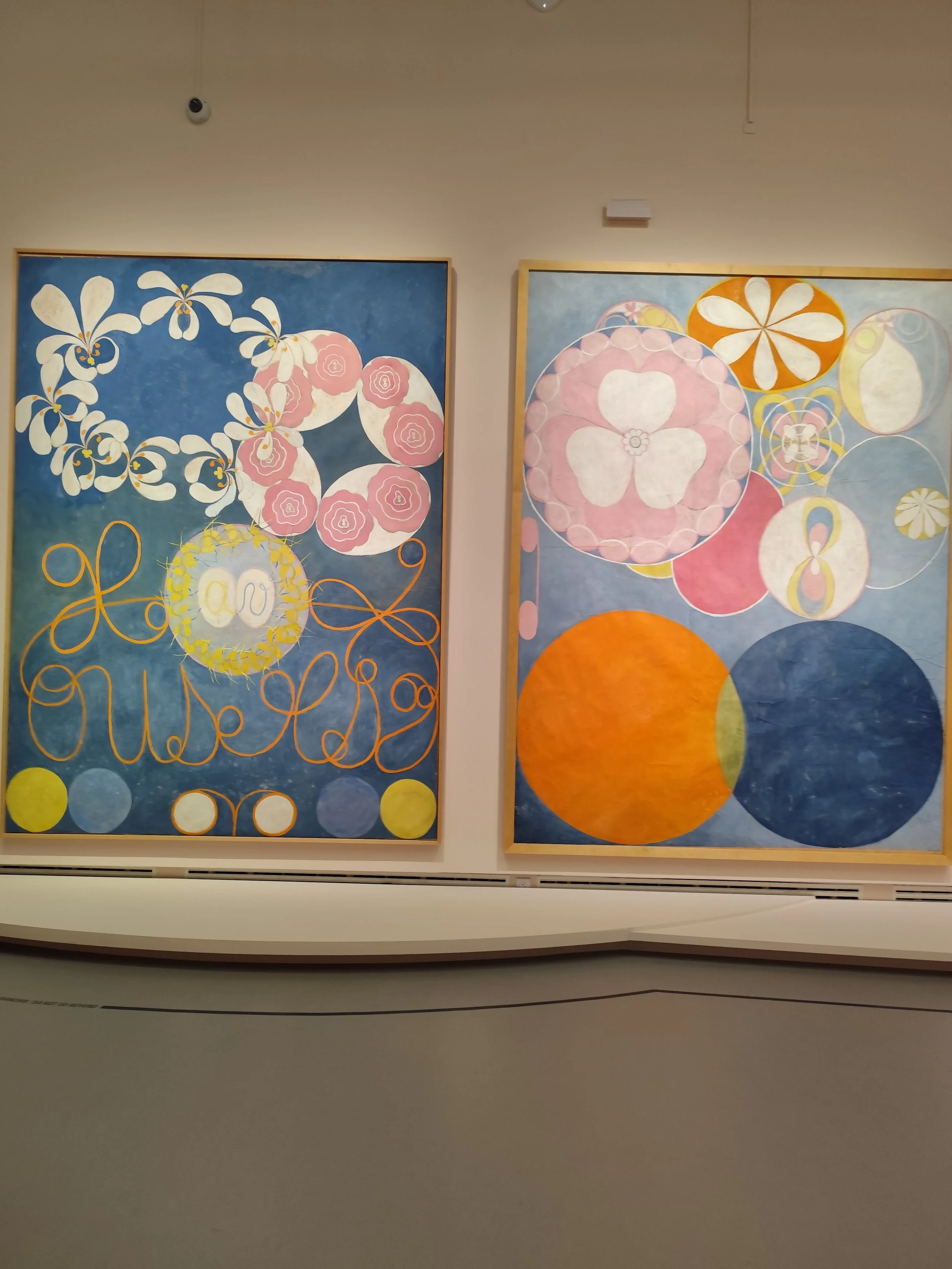
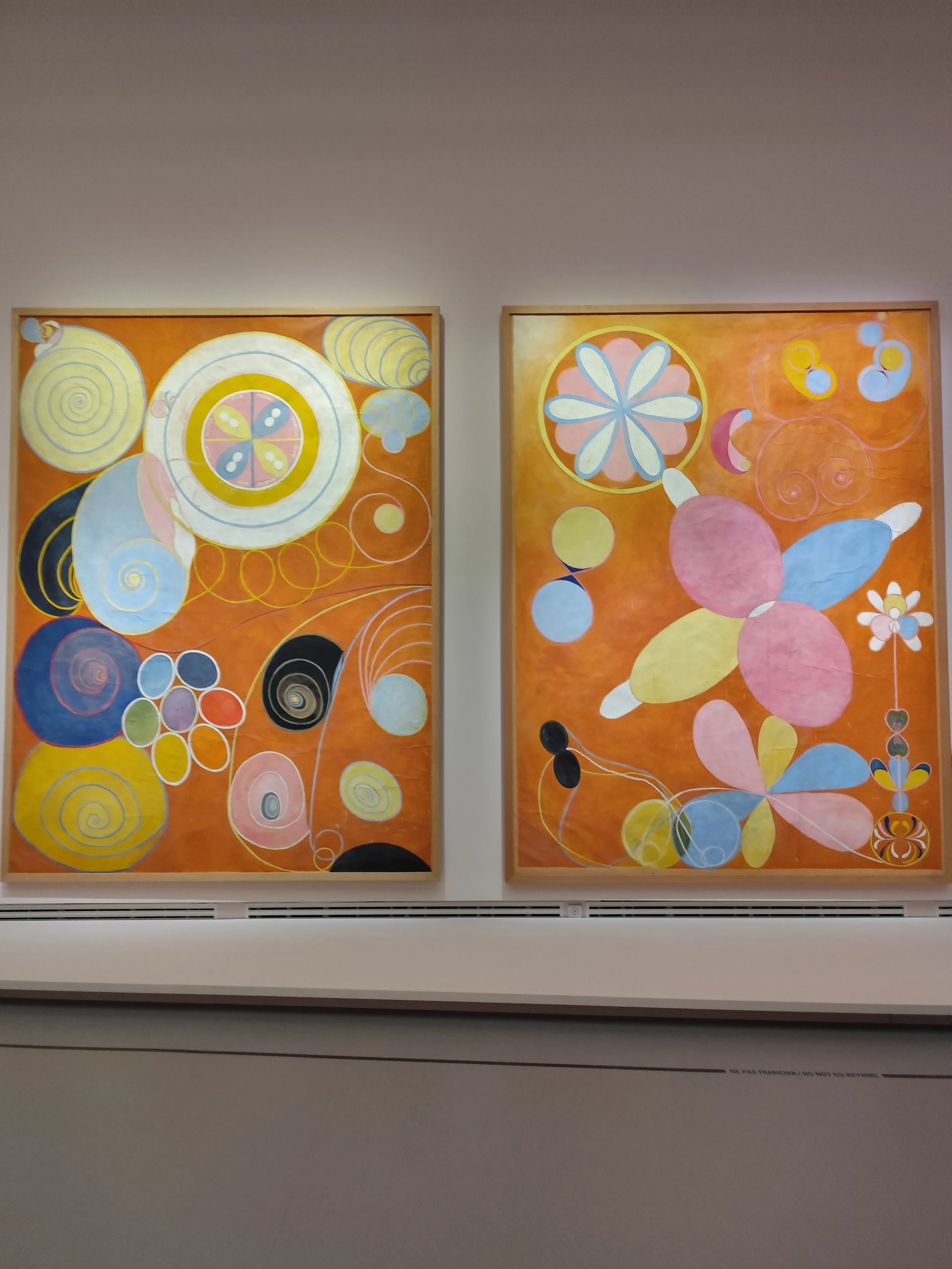
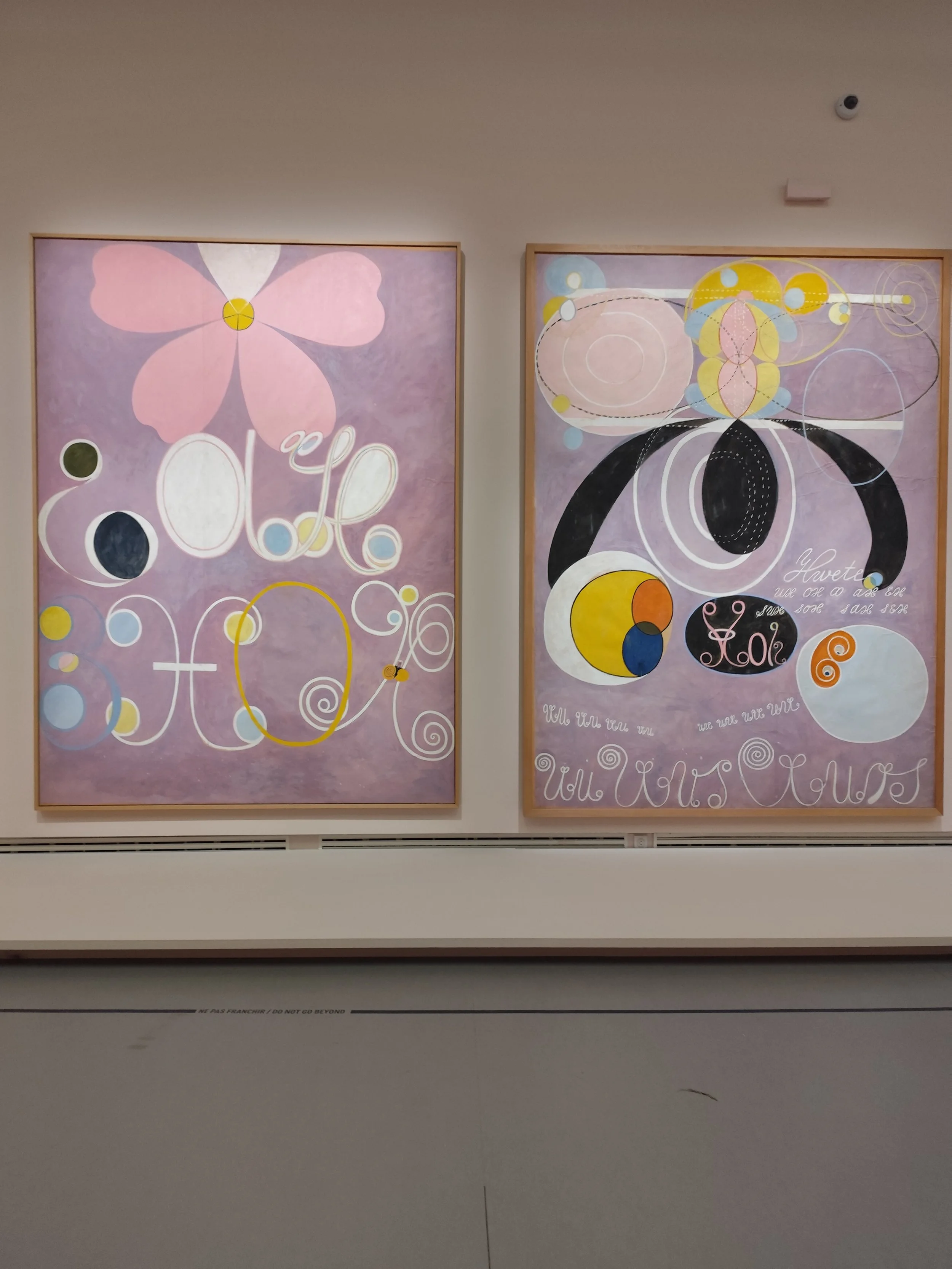
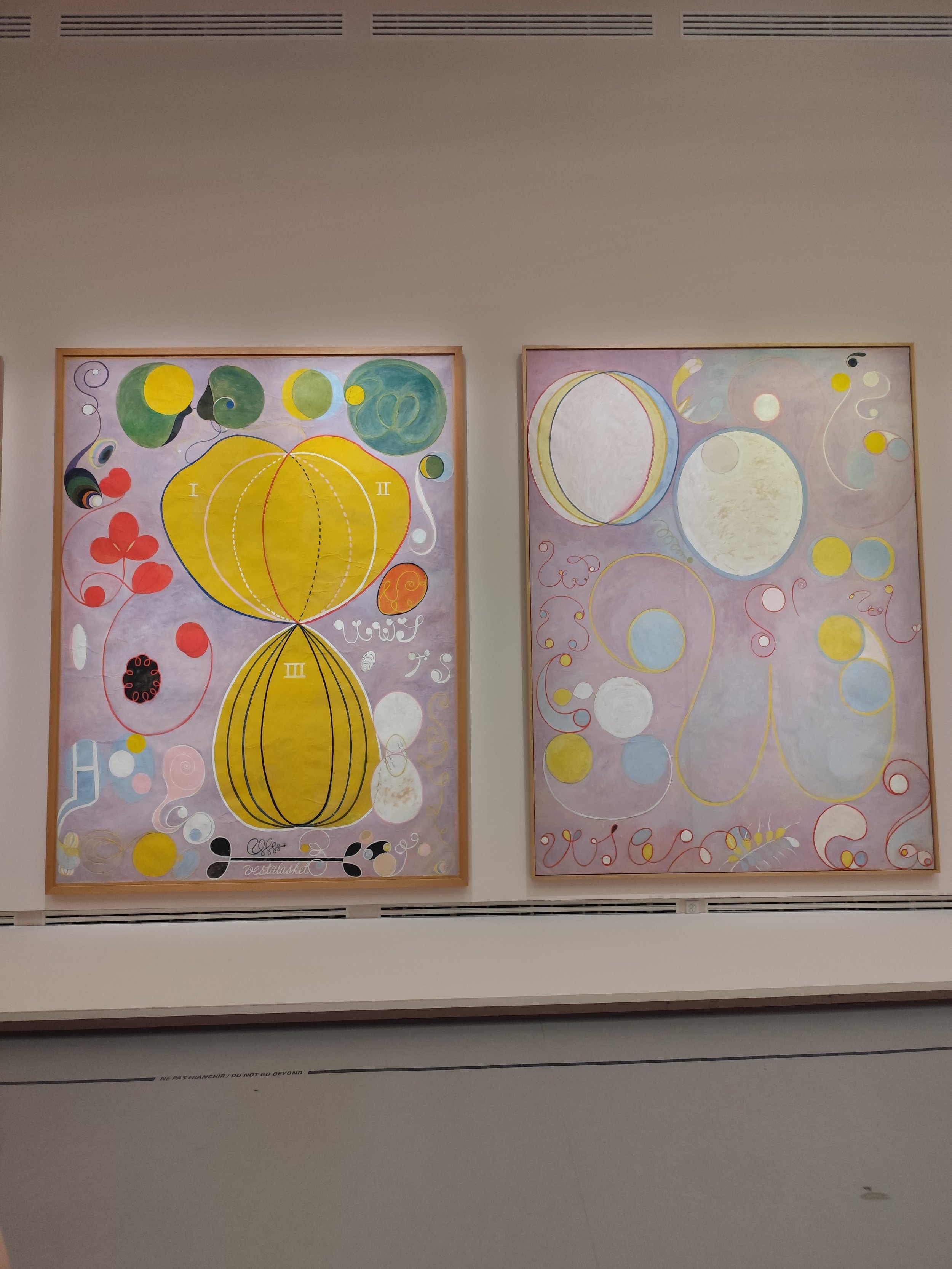
The Ten Largest (October to December 1907) are vast paintings on paper that af Klint described as commissioned by and channeled from spiritual guides. These 10 large panels revisit the different ages of life, a popular figurative motif in Nordic folk traditions. Created with egg tempera, a medium used by Renaissance artists for religious paintings, these works on paper are filled with biomorphic and geometric forms, pulsate with vibrant colors. One can decipher the different stages - from infant to old age- each one portrays. Miraculously, these fragile works on paper remain dazzling and fresh today, over a century after they were made!
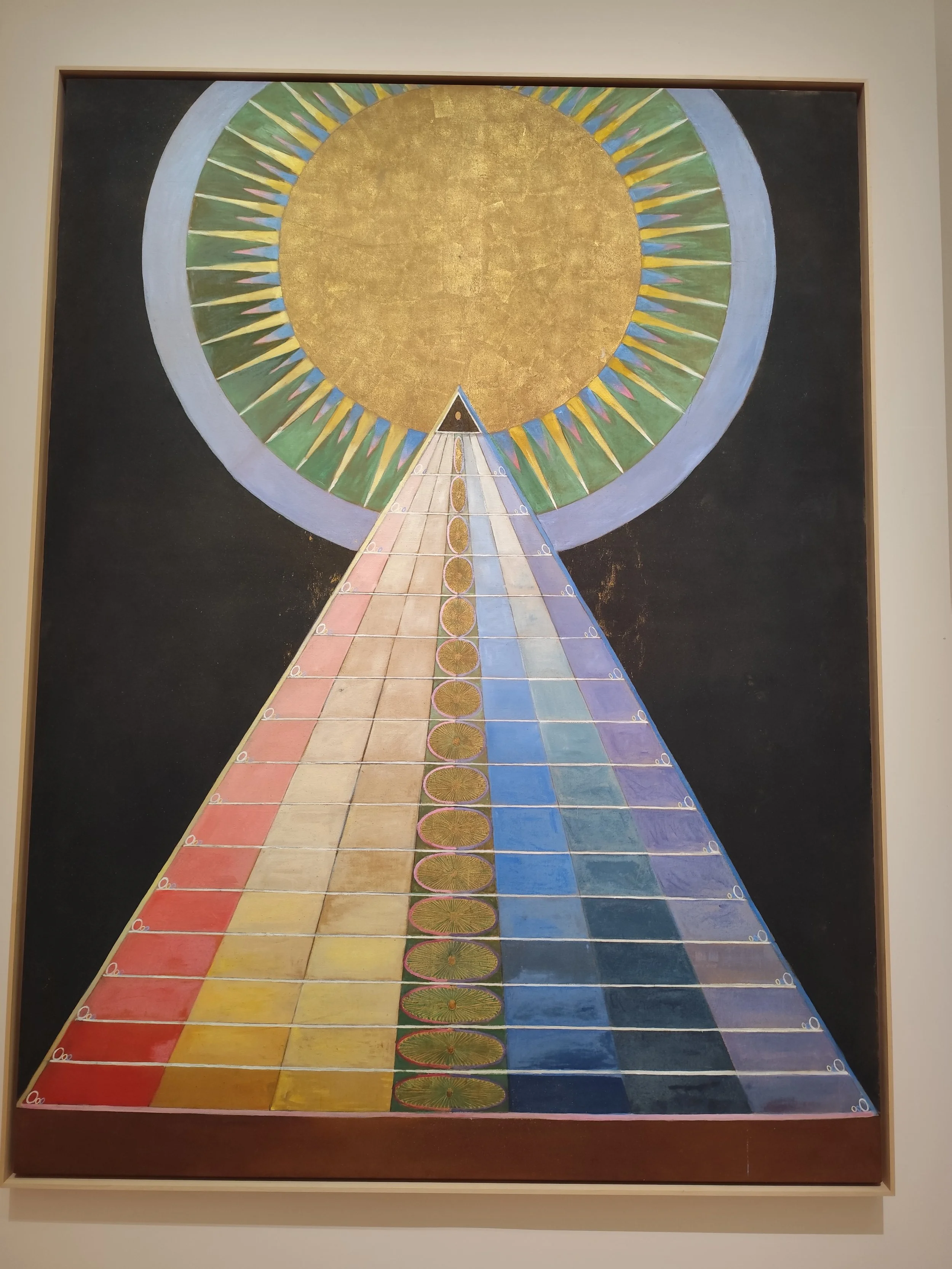
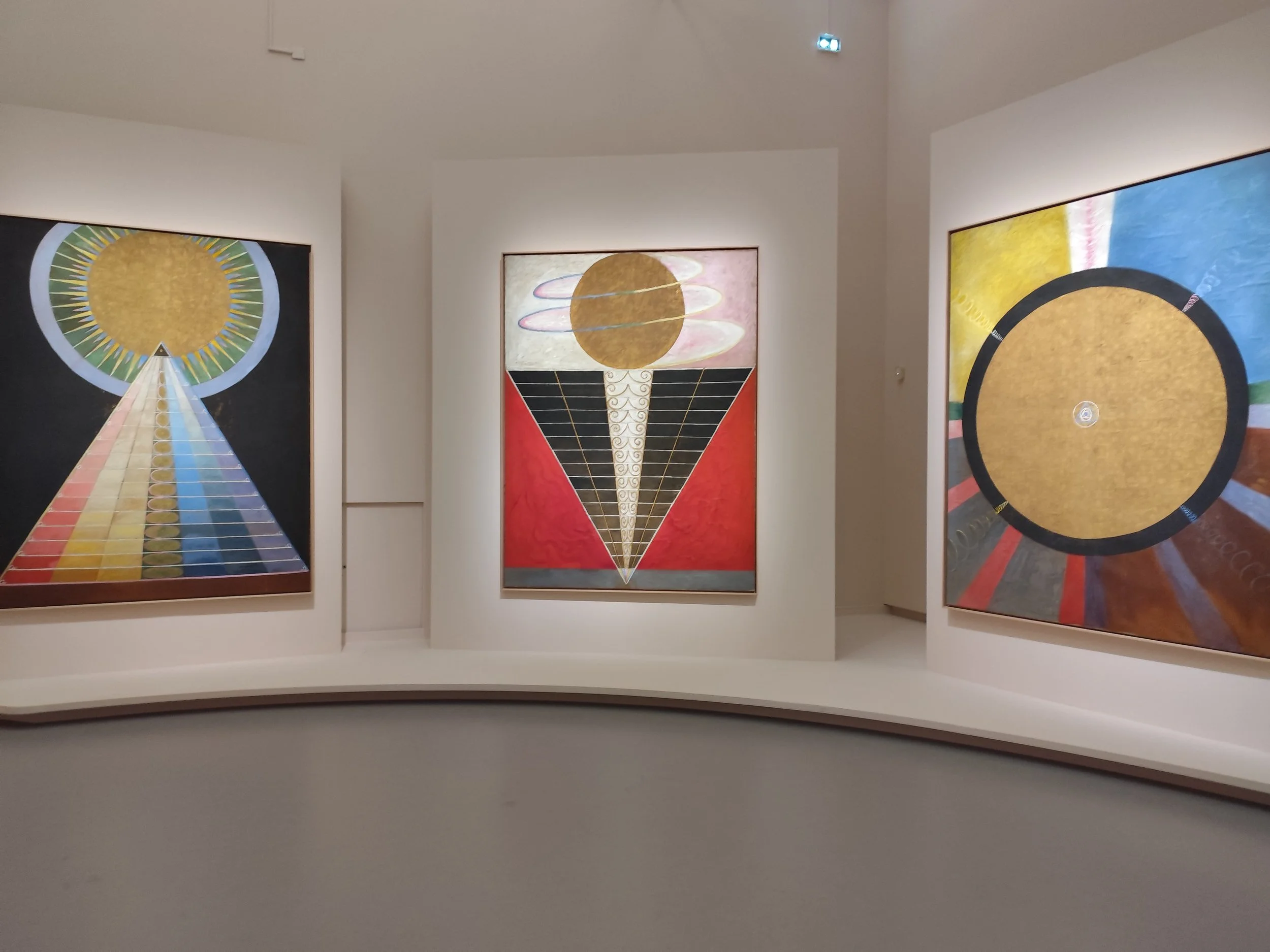
The Altarpiece series (1915), which she conceived as the conclusion of the Paintings for the Temple cycle, carries a different energy: more resolved, monumental, the feeling of a vast project arriving at its appointed end.
Experiencing these works for the first time was not simply eye-opening - it was truly a breath-taking encounter. Each piece, with scientific, religious, and spiritual symbolism heavily interwoven with each other, has a visual intelligence operating on a different scale from almost any abstraction I have seen.
Each sub-series carries its own mysterious internal logic: color schemes, symbols, abstract and geometric forms that seem perpetually unresolved, ever-evolving, as though the image is still becoming itself every time you look at it.
Collector note: af Klint works are almost entirely held by the Hilma af Klint Foundation, which loans but does not sell from the artist's estate. Original works rarely come to market. For collectors, the significance lies in deepening fluency in a figure who is now permanently reshaping how the art world understands the origins of modern abstraction.
- reviewed & photos taken by Hilary Tsui, Founder CityTransit Arts | Art Advisor & Curator
_________
[1] Spiritism: Early on, Hilma af Klint frequented spiritist circles in order to communicate with the deceased or “higher beings”. Participants used a psychograph to produce “mediumistic” drawings, which delivered more or less cryptic messages. The artist’s notebooks contain drawings that record communication with spirits at séances conducted between 1896 and 1910 by the Five (de Fem) group.
[2] Theosophy - Co-founded in 1875 in New York by the Ukrainian occultist writer Helena Blavatsky and the American military officer and journalist Henry Olcott, the Theosophical Society set out to spark spiritual renewal through a universal religion that would fuse Buddhist wisdom with Christian esotericism. Theosophy's influence explains the multitude of symbols in af Klint's work.
[3] This group of ten series is af Klint’s most ambitious undertaking. She kept it secret, concluding that the world was not yet ready to understand her paintings, which existed outside the Swedish academic tradition and gave form to invisible forces and mystical concepts. First phase (1906-1908); Primordial Chaos, Eros, The Largest Figure Paintings, The Ten Largest, The Seven-Pointed Star, Evolution, The Small Watercolours. Second phase (1912-1915): The US Series, Swan, Dove, Altarpiece.